


In this article, explore iconic Canadian desserts—from creamy, no-bake Nanaimo bars to fruit-filled Saskatoon berry pie—that are delighting sweet tooths worldwide. You’ll discover the roots of Canada’s dessert heritage, how these sweet treats have evolved through Indigenous and European influences, and the modern culinary trends and marketing strategies that are helping them gain a global following.
Check out more of our Canadian sweet treats here.
Sweet Beginnings: Exploring the History of Canadian Desserts
Canadian desserts embody a rich blend of Indigenous culinary knowledge and European baking techniques. Over centuries, this intersection of traditions produced a suite of sweet treats that marry local ingredients—particularly maple syrup—with familiar pastry methods. Whether you crave buttery fillings or crave the crunch of coconut-laced bars, there’s a dessert reflecting Canada’s resourcefulness and creative flair.
Indigenous Influences on Canadian Dessert Traditions
Indigenous peoples mastered tree-tapping long before European contact, leading to the discovery of maple sap. This natural sweetener became the core of early Canadian desserts and remains a defining feature of the country’s confectionery scene. Simple, nature-based recipes laid the groundwork for sweets like butter tarts, which rely on minimal yet high-impact ingredients such as butter, sugar, eggs, and (sometimes) raisins.
European Settler Contributions to Canada’s Dessert Heritage
When Europeans arrived, they melded their baking traditions with Indigenous practices:
- Adoption of Maple Syrup: Recognizing its distinct flavor, settlers integrated it into cookies, pastries, fudge, and more.
- New Techniques: Classic dough-making and custard-filling methods combined with Canada’s local ingredients.
This synergy gave rise to iconic treats like butter tarts, reflecting a fusion of heritage and innovation.
Iconic Canadian Desserts Loved Around the World
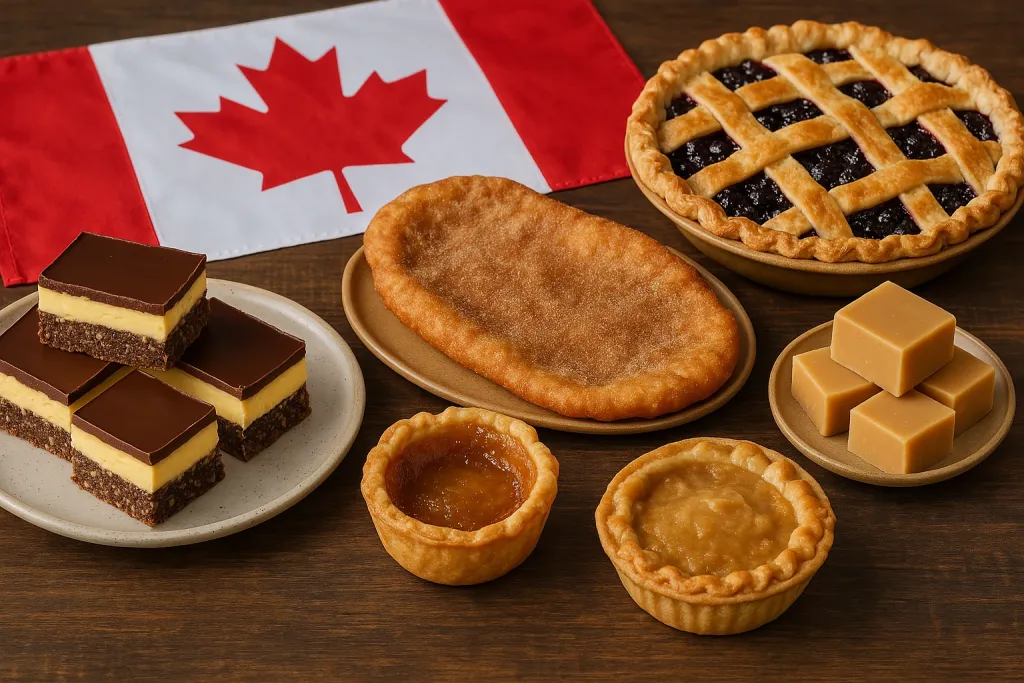
Here’s a quick overview of the most beloved Canadian desserts, each showcasing a unique aspect of the nation’s sweet tooth.
| Dessert | Key Components | Notable Trait | Region |
|---|---|---|---|
| Nanaimo Bar | Chocolate-coconut base, custard icing, chocolate ganache | Triple-layered, no-bake delight | Nanaimo, British Columbia |
| Butter Tart | Flaky crust, butter-sugar-egg filling (with or without raisins) | Gooey center, debated raisin inclusion | Ontario |
| BeaverTails | Fried dough shaped like a beaver’s tail, sweet (or savory) toppings | Inventive variations, fun shape | Originated in Ottawa |
| Maple Fudge | Pure maple syrup, sugar, butter | Creamy texture, all-natural sweetness | Predominantly Quebec |
| Saskatoon Berry Pie | Native Saskatoon berries, flaky pastry, minimal sweeteners | Almond-like berry flavor, regional prairie specialty | Saskatchewan, Alberta |
Nanaimo Bars: Canada’s Sweet Ambassador
Nanaimo bars feature three distinct layers—a crumbly coconut base, creamy custard center, and smooth chocolate top. Their precise origins spark debate, but they indisputably rank among the most recognizable Canadian desserts, popping up in coffee shops from Vancouver to international destinations.
Discover Canada’s most popular chocolate bars here.
Butter Tarts: The Quintessential Canadian Treat
A flaky pastry shell and a rich, gooey filling define butter tarts. They often inspire heated discussions over whether raisins belong in the recipe or not. To celebrate this simple yet irresistible dessert, Ontario boasts several “butter tart trails,” underscoring how significant this tart is to Canadian food culture.
Learn more about artisanal bakeries in Canada.
BeaverTails: A Beloved Canadian Classic
BeaverTails (fragrant fried dough shaped like a beaver’s tail) arrived on Ottawa’s scene in 1978. The original topping of cinnamon and sugar remains a favorite, but modern versions can include anything from candy pieces to savory toppings. This playful dessert highlights Canadians’ penchant for innovation and comfort foods.
Maple Magic: The Role of Maple Syrup in Canadian Desserts
Maple syrup reigns as Canada’s signature sweetener, a legacy traced back to Indigenous techniques of tapping maple trees. Quebec leads global production, churning out more than 70% of the world’s supply. Maple syrup graces everything from cookies to fudge, reinforcing Canada’s culinary identity and fueling international interest in these sugary delights.
Maple Syrup: Canada’s Signature Ingredient
Canada’s maple syrup industry flourished thanks to centuries of Indigenous knowledge embraced by French settlers. Beyond sweetening Nanaimo bars or butter tarts, this syrup finds its way into marinades, glazes, and beverages. Its distinct caramel-like sweetness and cultural roots make it a powerful emblem of Canadian pride in global markets.
Maple Fudge: Blending Tradition with Innovation
Maple fudge spotlights the luxurious side of Canadian desserts. Brands like Turkey Hill Sugarbush Ltd. prioritize pure maple syrup in production, creating treats that blend old-world confectionery techniques with modern convenience. The result is individually wrapped squares of fudge that taste unmistakably of genuine Canadian maple.
Unique Regional Dessert Specialties Across Canada
Canadian desserts reflect regional flavors, from Saskatoon berry pie in the prairies to Pouding Chômeur in Quebec. While the latter started as a Depression-era creation made with simple cake batter and hot syrup, it endures as a classic comfort food. Each local specialty showcases the diversity and warmth found in Canada’s culinary tapestry.
Saskatoon Berry Pie: The Prairie Favorite
Saskatoon berries offer a mild almond-like flavor, setting them apart from more common blueberries. Historically important to Indigenous communities, these berries remain a prized ingredient in pies, jams, and pastries. Fans often enjoy a slice of Saskatoon berry pie topped with ice cream or whipped cream for a true taste of the prairies.
Check out these top-rated Canadian ice cream & gelato shops.
Pouding Chômeur: Quebec’s Comforting Classic
Meaning “unemployment pudding,” Pouding Chômeur exemplifies Quebec’s inventive spirit. Originally poured over with caramel or maple syrup, this dessert features a quick cake batter that bakes into a soft, comforting dish. Though it emerged during hard times, it now holds a cherished place in Quebecois households and restaurants.
(Note: Poutine, though famously Canadian, is a savory dish and is thus excluded from this dessert spotlight.)
Why the World Loves Canadian Desserts
Unique Flavors and Textures that Delight Global Palates
Canadian desserts are beloved for their comforting familiarity and distinctive twists:
- Maple Depth: Canada’s star sweetener lends a caramel note unlike standard refined sugar.
- Layered Sensations: The triple-tier composition of Nanaimo bars or the crisp-meets-gooey appeal of butter tarts keeps taste buds intrigued.
Authenticity and Cultural Significance in Desserts
Recipes like butter tarts and BeaverTails carry decades (if not centuries) of history, connecting modern dessert lovers with the country’s frontier spirit and community-based traditions. Chefs and home bakers alike keep these treats culturally relevant, weaving historical significance into every indulgent bite.
Modernizing Tradition: How Canadian Desserts Evolve With Global Culinary Trends

Shifts in consumer diets prompt bakers and confectioners to experiment with recipe variations. Gluten-free and vegan Nanaimo bars are now commonplace, as are low-sugar versions of maple fudge.
Creative Modern Interpretations of Classic Desserts
- Nanaimo Bars with a Twist: Infused with peanut butter or spiced with chai.
- Butter Tarts Beyond Raisins: Variants swap raisins for chocolate chips, chopped nuts, or coconut flakes.
Fusion with International Culinary Influences
Canadian sweets readily mingle with global trends—bannock can become a sweet bread base for fruit toppings, and maple syrup glazes appear in pastry traditions worldwide. This adaptability cements Canada’s reputation as both nostalgic and future-forward in the dessert world.
Going Viral: Marketing Canadian Desserts Globally
Leveraging Social Media Platforms for Dessert Popularity
- Eye-Catching Photos: Instagram and Pinterest amplify exposure through drool-worthy images of gooey, layered sweets.
- Travel Trails: Tourism campaigns like the Nanaimo Bar Trail harness influencer interest to bring more visitors into the fold.
Collaborations with International Chefs and Influencers
Prominent chefs and food bloggers infuse Canadian desserts with new flavors, promoting them to followers worldwide. These partnerships often yield imaginative recipes, fueling curiosity and ensuring a steady rise in global fanfare.
Overcoming Challenges: Bringing Canadian Desserts to a Global Audience
Navigating Cultural Misinterpretations Abroad
Some international adaptations of Nanaimo bars or butter tarts may lack authentic layers or rely on different ingredients. Canadian tourism boards and regional artisans encourage accurate recipes, balancing innovation with respect for tradition.
Addressing Ingredient Availability Issues Worldwide
- Saskatoon Berries: Hard to find outside certain regions, sometimes replaced with blueberries—altering the classic flavor.
- Premium Maple Syrup: Ensuring consistent quality is crucial to keeping the dessert’s signature taste intact.
Health and Dietary Trends in Canadian Desserts
Adapting Traditional Recipes for Special Diets (Vegan, Gluten-Free)
- Vegan Nanaimo Bars: Plant-based butter and egg substitutes replicate that creamy middle without dairy.
- Gluten-Free Butter Tart Shells: Bakers swap traditional wheat flour for nut or rice flours, keeping the filling just as gooey.
Innovations in Low-Sugar and Healthy Canadian Dessert Options
- Maple Syrup’s Lower GI: Offers a gentler alternative to refined sugar.
- All-Natural Fudge: Minimally processed recipes showcase the depth of premium maple syrup, reflecting a shift toward clean-label products.
Frequently Asked Questions (FAQ)
Q: What is Canada’s most famous dessert?
A: Many argue that Nanaimo bars top the list, thanks to their layered structure, custard filling, and widespread availability.
Q: Are butter tarts always made with raisins?
A: The inclusion of raisins is hotly debated. Some bakers add nuts or chocolate chips, while others stick to a smooth filling.
Q: Is maple syrup healthier than regular sugar?
A: Maple syrup has a lower glycemic index and offers trace minerals, but it should still be enjoyed in moderation as part of a balanced diet.
Q: Where can I find Canadian desserts abroad?
A: Specialty bakeries, international chains (like certain coffee shops), and online retailers often carry Canadian sweet treats. You can also try making them at home with genuine Canadian maple syrup.
Canadian desserts—from the iconic Nanaimo bar to the comforting butter tart—bring together centuries of tradition, warm hospitality, and an evolving culinary vision. With each new adaptation and global collaboration, these sweets reinforce Canada’s reputation for inventive, maple-kissed indulgences that continue to charm dessert enthusiasts everywhere.
See how you can Buy Canadian First for authentic ingredients in this article!