
Choosing the right Canadian city to call home involves balancing dreams with dollars, especially in the bustling cultural hubs of Toronto, Vancouver, and Montreal. As Canada continues to attract people globally for its quality of life, understanding the cost of living is crucial for financial planning in 2025. Each of these major cities offers unique attractions and economic challenges, impacting your finances in distinct ways.
Toronto, Vancouver, and Montreal each present different living conditions, job markets, and lifestyle opportunities. Housing costs, public transportation networks, and salary expectations vary significantly. Grasping these differences is key to determining which city aligns best with your personal and financial goals.

This article provides a comparison of the cost of living across Toronto, Vancouver, and Montreal, focusing on data relevant for 2025. We’ll explore essential factors like housing affordability, transportation expenses, salary prospects, and other daily costs to help you decide which of these iconic Canadian cities best fits your budget.
Introduction to Cost of Living in Canadian Cities
In 2025, the cost of living remains a primary consideration for anyone moving within or to Canada. While each city offers a unique blend of opportunities, expenses can differ dramatically. Nationally, estimates for a single person’s average monthly expenses excluding rent often range from $1,400 to $1,700 CAD, according to crowdsourced data platforms like Numbeo. Rent adds substantially to this figure, particularly in major urban centres.
Comparing cities, Toronto and Vancouver consistently rank among Canada’s most expensive places to live, largely driven by high housing costs. In contrast, cities like Montreal generally offer more affordable living options. Understanding these regional disparities in housing, transportation, food, and taxes is vital for making informed decisions.
Importance of Cost of Living in Choosing a City
The cost of living is a critical factor when choosing a city. It directly impacts your disposable income and overall financial well-being, determining how much you need monthly for essentials like rent, groceries, and utilities. In high-cost cities like Toronto and Vancouver, managing your budget requires careful planning.
Financial experts suggest that to live comfortably, a single person might need an annual net income ranging significantly based on location – potentially $40,000-$50,000+ in more affordable cities, but possibly $60,000-$70,000+ in Toronto or Vancouver. For a family of four, these requirements could range from $70,000 to over $100,000 net annually. However, these are general guidelines, heavily influenced by lifestyle choices, debt levels, and specific neighbourhood costs. Evaluating the cost of living alongside job opportunities and quality of life helps ensure financial stability.
Overview of Toronto, Vancouver, and Montreal
Toronto, Vancouver, and Montreal have distinct cost of living profiles:
- Toronto: As Canada’s largest city, Toronto’s estimated monthly expenses including rent for a single person often range from $3,500 to $4,500+, while a family of four might need $7,500-$9,000+. High housing costs are the primary driver.
- Vancouver: Known for its stunning scenery, Vancouver rivals Toronto in expense. Estimated monthly costs including rent for a single person can be $3,800 to $4,800+, with families potentially needing $8,000-$9,500+. Again, housing affordability is the main challenge.
- Montreal: Montreal offers a more affordable alternative. Estimated monthly costs including rent might range from $2,800 to $3,500+ for a single person, and $6,000-$7,500+ for a family. Significant savings, especially on rent, make it attractive.
Housing Market Analysis
Housing affordability remains a dominant theme across Canada in 2025; the latest CMHC Housing Market Outlook 2025 confirms that benchmark prices in Toronto and Vancouver stay well above national averages. Vancouver and Toronto continue to grapple with some of the highest housing costs nationally, challenging both homebuyers and renters. According to the Canadian Real Estate Association (CREA), while market dynamics fluctuate, benchmark prices in these cities remain significantly elevated compared to other regions. Montreal generally offers more attainable housing, though prices have also seen increases.
Toronto’s Real Estate Challenges
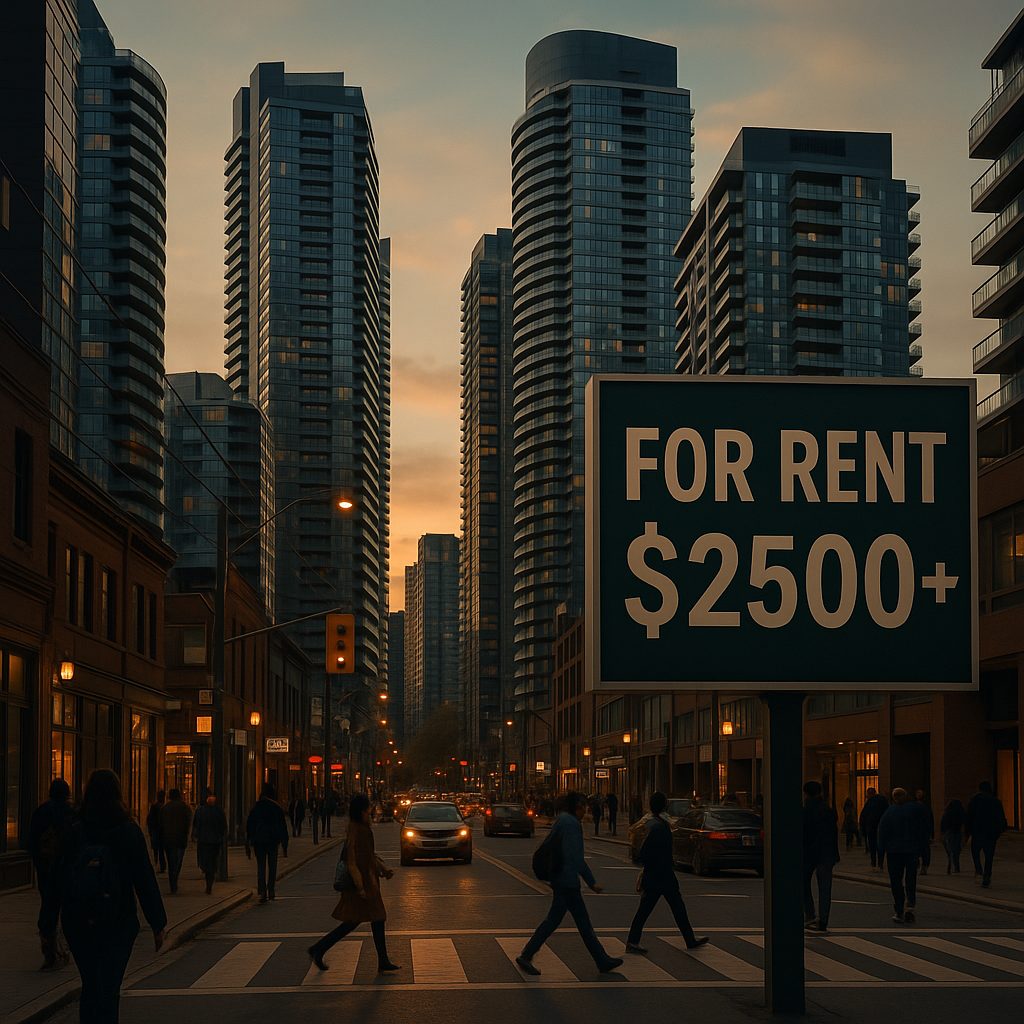
Toronto’s real estate market presents significant hurdles. As of early 2025, the average price for all home types remained well over $1 million CAD, according to the Toronto Regional Real Estate Board (TRREB). Affording a home often requires an annual household income exceeding $200,000, based on recent analyses by platforms like Ratehub. The rental market is also tight; data from sources like Rentals.ca consistently shows the average rent for a one-bedroom apartment hovering around $2,500-$2,600 per month. High demand and borrowing costs continue to exert upward pressure on both purchase prices and rents, making budgeting for shelter a major concern for Torontonians, even when looking for cheap eats in Toronto near your hotel or other ways to save.
Vancouver’s Desirable Yet Expensive Housing
Vancouver is renowned for its natural beauty and lifestyle, but this desirability comes at a steep price, particularly for housing. It frequently tops lists as Canada’s most expensive city. As reported by Rentals.ca and Zumper, the average monthly rent for a one-bedroom apartment often exceeds $2,700-$2,800 CAD in early 2025. Average home prices remain the highest in the country, often surpassing $1.2 million CAD. While some costs like basic utilities might be closer to the national average, the sheer cost of housing dominates the cost of living calculation, making it a challenging market for many.
Montreal’s Affordable Housing Conditions
Compared to Toronto and Vancouver, Montreal offers significantly more affordable housing.The average rent for a one-bedroom apartment, according to Rentals.ca, was closer to $1,700-$1,800 CAD per month in early 2025.While still a major expense, this relative affordability frees up more of the household budget. Montreal’s unique blend of North American and European culture, vibrant arts scene – including access to some of the best artisanal bakeries in Canada – and efficient public transport contribute to its appeal as a city offering a high quality of life without the extreme housing costs of Canada’s other largest metropolises.
Public Transportation and Infrastructure
Public transit is a key factor in urban cost of living. Toronto, Vancouver, and Montreal boast extensive networks, influencing daily commutes and budgets.

Efficiency and Costs in Toronto
Toronto’s TTC (Toronto Transit Commission) operates subways, streetcars, and buses. A monthly pass costs $156 (as of early 2025 – see the TTC’s official fare information). While comprehensive, relying on transit is often essential due to traffic and high parking costs downtown, making it a necessary part of the budget.
Public Transport Options in Vancouver
Vancouver’s TransLink system uses a zone-based fare structure. A monthly pass costs roughly $105 (1 zone), $140 (2 zones), or $190 (3 zones) (early 2025 fares). This offers a cost-effective alternative to driving, especially given high downtown parking rates.
Montreal’s Accessible Transport System
Montreal’s STM (Société de transport de Montréal) network of metro and buses is known for accessibility. A monthly pass costs around $97 (early 2025). Combined with the city’s relatively compact and walkable nature, efficient transit makes car ownership less necessary for many residents, contributing to Montreal’s overall affordability.
Employment and Salary Prospects
Job opportunities and salaries vary across these economic hubs. Data from Statistics Canada (based on the latest available census/survey data, often reflecting the previous year or two) provides insights:
- Toronto: Generally boasts higher median household incomes, reflecting its status as Canada’s financial centre. The job market is diverse, spanning finance, tech, media, and healthcare.
- Vancouver: Offers competitive salaries, particularly in tech, film/digital media, and trades. Median incomes are typically high but need to be weighed against the very high cost of living.
- Montreal: Median household incomes are generally lower than in Toronto or Vancouver. However, the lower cost of living can mean greater purchasing power for some. Key sectors include aerospace, tech, AI research, life sciences, and creative industries. It’s also home to many top Canadian brands.
Job Market in Toronto
Toronto’s diverse and dynamic economy offers robust employment opportunities, making it a magnet for professionals despite the high cost of living. Continuous growth in key sectors ensures a competitive job market.
Employment Opportunities in Vancouver
Vancouver features a resilient economy with strong growth in technology, digital entertainment, tourism, and green industries. It attracts skilled workers seeking careers in innovative fields alongside a desirable lifestyle.
Montreal’s Income and Job Landscape
Montreal provides a unique balance. While average salaries may be lower, the significantly lower cost of living, particularly housing, makes it appealing. Quebec’s income tax rates are relatively high, which should be factored into budgeting, but the overall affordability remains a key advantage.
Additional Living Expenses
Beyond housing and transit, other costs add up:
Grocery Prices Across the Three Cities

Grocery costs are a significant expense. While prices fluctuate, Canada’s Food Price Report projected continued (though perhaps slower) increases into 2025. A single person’s monthly grocery bill might realistically range from $400-$600+, depending on diet and location. Montreal often has slightly lower grocery costs compared to Toronto and Vancouver, according to Numbeo data comparisons, but all major cities face similar inflationary pressures.
Utilities and Monthly Bills
Utilities are a major part of living expenses in Canadian cities like Toronto. For a single person or a couple, monthly costs can range between $350 and $400, covering essentials like electricity, heat, water, cooling, garbage, internet, and mobile services. Specifically, basic utility costs, which include electricity, heat, water, and garbage, typically fall between $120 and $145 monthly. Internet services cost anywhere from $56 to $100 per month on average. Furthermore, monthly gas expenses vary significantly from $140 to $220, while a mobile phone bill costs between $35 and $90. These monthly bills contribute significantly to living costs and need to be considered carefully when planning a budget in major Canadian cities like Toronto.

Entertainment and Dining Costs
Costs for leisure vary. A meal at an inexpensive restaurant might cost $20-$25+, while a three-course dinner for two at a mid-range restaurant could be $80-$120+. Movie tickets average $15-$20. Gym memberships range from $50-$100+. Toronto, Vancouver, and Montreal all offer a vast array of free activities (parks, festivals, hiking) alongside paid entertainment, allowing for budget-conscious choices. Exploring the ultimate spa and staycation destinations in Ontario offers another perspective on leisure spending.
Education and Career Opportunities
All three cities are major centres for post-secondary education and offer diverse career paths. Toronto boasts numerous universities and colleges alongside its massive job market. Vancouver offers world-class institutions amidst stunning natural beauty. Montreal is renowned for its top universities (some English, some French) and its unique position as a bilingual and multicultural hub, attracting students and researchers globally.
Cultural and Lifestyle Considerations
Lifestyle preferences play a huge role:
Toronto’s Urban Vibe and Diversity
Toronto, Canada’s largest city, is the heart of urban excitement and cultural diversity.With a bustling population, it thrives on multiculturalism, welcoming visitors and residents from around the world.This diversity creates a dynamic blend of traditions, tastes, experiences, and styles, reflected everywhere from its neighbourhoods to its shopping, featuring everything from global brands to the latest in Canadian streetwear drops.
While Toronto buzzes with urban energy, it is also close to nature, with the Great Lakes and lush parks nearby.Yet, life in Toronto can be expensive, with high costs for rent and daily living necessities impacting how residents furnish their homes, though many excellent top Canadian furniture brands offer options. Nevertheless, the vibrant lifestyle and opportunities make Toronto a magnet for many.
Vancouver’s Natural Beauty and Lifestyle
Vancouver appeals to those prioritizing outdoor activities and a health-conscious lifestyle, thanks to its proximity to mountains and ocean. It offers a more laid-back vibe than Toronto (though still a major city) but demands a premium budget for its desirable setting.
Montreal’s Vibrant Culture and Events
Montreal offers a unique European flair with North American energy. Its bilingualism, thriving arts scene, historic architecture, and numerous festivals provide a culturally rich environment at a more affordable price point than Toronto or Vancouver.
Conclusion: Aligning Budget with City Lifestyle
Choosing between Toronto, Vancouver, and Montreal in 2025 requires a careful assessment of your financial situation against the lifestyle each city offers.
- Toronto: Best for those prioritizing career opportunities in specific major industries (finance, large corporations) and a fast-paced urban life, provided they have the income to support the high cost of living.
- Vancouver: Ideal for individuals valuing outdoor access and natural beauty who can manage the extremely high housing costs, often requiring significant income or financial flexibility.
- Montreal: Suited for those seeking a vibrant, culturally rich, bilingual environment with a more manageable cost of living, particularly regarding rent, making it attractive for students, artists, and those seeking better work-life budget balance.
Balancing Finances and Quality of Life
Ultimately, the “best” city depends on individual priorities. While Toronto and Vancouver offer high salaries in many sectors, the cost of living, especially housing, consumes a large portion of that income. Montreal’s lower salaries are offset by significantly lower living expenses, potentially offering a similar or better quality of life for those on a tighter budget.
Strategic financial planning is essential regardless of the city. Creating a detailed budget, understanding housing realities (like finding affordable accommodation if visiting or relocating), exploring ways to save on daily expenses, and potentially supporting the Canadian economy through local purchasing are all key steps. By carefully comparing the costs and benefits, you can make an informed decision that aligns your financial reality with your desired Canadian city lifestyle in 2025.